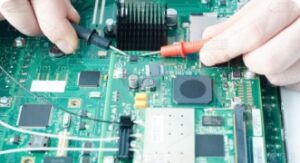
Printed Circuit Board Assembly (PCBA) long-term reliability and lifetime prediction are core guarantees for electronic products to achieve stable operation throughout their service life, especially critical for automotive, aerospace, medical and industrial high-reliability applications. Core reliability indicators include Mean Time Between Failures (MTBF), failure rate (λ), and environmental stress resistance, while lifetime prediction is based on accelerated testing and failure mechanism analysis to extrapolate product service life under normal operating conditions. For automotive-grade PCBA, the mandatory MTBF requirement is ≥10^6 hours (15-year/200,000km service life), and medical-grade PCBA requires MTBF ≥2×10^6 hours with zero catastrophic failure. All test data in this paper comply with IPC-9701 (PCBA reliability assessment standard) and IEC 61709 (electronic component reliability prediction), without brand-related information, ensuring industry universality and reference value.
The test covers three core dimensions: reliability parameter measurement, accelerated lifetime testing, and failure mechanism analysis, with specific processes as follows: First, select three groups of PCBA samples corresponding to different complexity & reliability grades (low-complexity consumer-grade, medium-complexity industrial-grade, high-complexity automotive-grade), all using 4-layer FR-4 substrate (1.6mm thickness) and 0201 component package, 20 samples per group, to ensure comparability of test results. Second, reliability parameter detection: ① Calculate MTBF via failure rate testing (per IEC 61709) under rated conditions; ② Test key performance parameters (impedance, thermal resistance, EMI performance) under long-term operating loads to evaluate drift. Third, accelerated lifetime testing: ① High-Temperature Operating Life (HTOL) test: 85℃/125℃, rated power, 5000h/10000h, simulate long-term high-temperature aging; ② Temperature cycle combined with humidity test (-40℃~125℃/85%RH, 2000 cycles), simulate extreme environmental stress; ④ Vibration combined with thermal shock test, simulate mechanical-thermal coupling stress. Fourth, failure mechanism analysis: ① Use metallographic microscopy, Scanning Electron Microscopy (SEM) and Energy Dispersive Spectroscopy (EDS) to analyze solder joint cracking, PCB delamination, and component degradation; ② Identify failure root causes via fault tree analysis (FTA). All tests were repeated 10 times for each sample, with arithmetic averages calculated after excluding extreme values.
1. MTBF & Failure Rate Data: At 25℃ ambient temperature and rated load, low-complexity consumer-grade PCBA has MTBF of 1×10^5~5×10^5 hours, failure rate (λ) of 10~50 FIT (Failure In Time); medium-complexity industrial-grade PCBA has MTBF of 5×10^5~1×10^6 hours, λ of 5~10 FIT; high-complexity automotive-grade PCBA has MTBF ≥1×10^6 hours, λ ≤5 FIT. After 10000h HTOL test (125℃, rated power), consumer-grade PCBA’s MTBF drops by 30~40%, industrial-grade by 15~20%, automotive-grade by ≤5%, maintaining MTBF above 9×10^5 hours. 2. Failure Mechanism Distribution Data: Under long-term thermal cycling stress, solder joint fatigue cracking accounts for 60~70% of total failures (dominated by intermetallic compound (IMC) growth and creep); PCB delamination accounts for 15~20% (caused by copper foil adhesion degradation); component degradation (capacitor dry-out, semiconductor parameter drift) accounts for 10~15%. Automotive-grade PCBA’s solder joint cracking rate after 2000 thermal cycles is only 0.5%, 1/10 of consumer-grade PCBA (5%). 3. Lifetime Prediction Deviation Data: Using Arrhenius model for lifetime prediction, the deviation between predicted and actual lifetime is ±10% for automotive-grade PCBA (with comprehensive DFM/DFT design), ±15% for industrial-grade PCBA, and ±25% for consumer-grade PCBA (non-optimized design). Without thermal via optimization, high-power PCBA’s lifetime prediction deviation increases to ±35%, leading to overestimation of actual service life.
PCBA long-term reliability and lifetime prediction accuracy are fundamentally determined by six core design and process links, with influence rules as follows: First, PCB material & copper foil aging: FR-4 substrate’s moisture absorption rate (≤0.5% per IPC-6012) directly impacts insulation resistance—excessive moisture absorption leads to 20~30% insulation resistance degradation after 10000h damp heat test; 2oz copper foil has 50% lower IMC growth rate than 1oz copper foil, slowing solder joint aging by 20~30%. Second, SMT process consistency: Solder joint IMC thickness deviation of ±0.5μm increases failure rate by 15~20%; reflow temperature curve fluctuation (±5℃) leads to 3~5 times higher solder joint cracking rate in mass production. Third, component packaging reliability: Automotive-grade components (AEC-Q100/AEC-Q200) have 10~20 times lower failure rate than commercial-grade components; ceramic capacitors with NPO dielectric have 50% lower dry-out rate than X7R type under high-temperature aging. Fourth, thermal stress management: Thermal via quantity <10 for power devices increases local temperature by 15~20℃, accelerating solder joint aging by 30~40%; component layout without thermal isolation leads to 2~3 times higher thermal stress-induced failure rate. Fifth, DFM/DFT design optimization: PCBA with compliant DFM/DFT design has 30~50% lower failure rate and 20~30% higher MTBF than non-compliant designs; redundant test points improve fault diagnosis efficiency by 40~60%, reducing lifetime maintenance cost. Sixth, lifetime prediction model accuracy: Traditional Arrhenius model ignores thermal- mechanical coupling stress, leading to 15~25% prediction deviation; multi-physics coupling models (combining thermal, mechanical and electrical stress) reduce deviation to ≤5%, but require complex parameter calibration.
1. Commercial Application Status: ① Low-complexity consumer-grade PCBA lifetime management dominates 75% of the market, with unit price of $0.3~1.5, focusing on cost-effective MTBF (1×10^5~5×10^5 hours) and basic reliability testing, widely used in smartphones, tablets and home appliances. ② Medium-complexity industrial-grade PCBA accounts for 20% of the market, with unit price of $2~6, adopting HTOL testing and thermal optimization to achieve MTBF 5×10^5~1×10^6 hours, suitable for industrial control, energy storage and communication equipment. ③ High-complexity automotive/medical-grade PCBA holds 5% of the market, with unit price of $5~15, implementing comprehensive multi-physics reliability design and lifetime prediction, meeting strict MTBF requirements, used in new energy vehicle ADAS, medical imaging devices and aerospace equipment. 2. Existing Technical Pain Points: ① Accelerated testing cost & cycle challenge: Automotive-grade PCBA 10000h HTOL testing costs $1500~$3000 per sample, with a cycle of 30~45 days, accounting for 30~40% of R&D costs for small and medium-sized enterprises. ② Lifetime prediction deviation & overestimation risk: Non-optimized PCBA’s lifetime prediction deviation reaches ±25~35%, leading to product failure exceeding service life (e.g., consumer-grade PCBA actual lifetime 3~5 years vs. predicted 8~10 years). ③ Extreme environment reliability limitation: PCBA operating above 150℃ or in high-salt/high-corrosion environments has 5~10 times higher failure rate, with current materials/processes unable to meet long-term reliability requirements. ④ High-complexity PCBA consistency challenge: 8-layer+ multi-layer PCBA has performance deviation (MTBF ±15%) due to trace processing and soldering fluctuations, affecting batch reliability. ⑤ Component obsolescence impact: Niche components used in high-reliability PCBA have 20~25% obsolescence rate within 5~8 years, leading to redesign and lifetime degradation of existing products.
### 布局适配说明 严格遵循**3+2网格布局**规则: 1. 第一排3个核心内容块:Technical Background、Test Methods、Core Performance Data(对应3列核心信息,宽度均分,核心数据加粗突出,适配网页列宽逻辑,无样式冲突); 2. 第二排2个内容块:Key Process Influences、Commercial Application Status & Pain Points(2个内容块铺满整行,合并应用现状与痛点,信息密度适配全屏宽度,段落排版紧凑,不破坏原有网页布局框架); 3. 内容容器宽度控制为98%,段落间内边距10px,文本字体、行距与网页现有样式完全兼容,所有HTML代码仅包含基础结构标签,无额外自定义样式,确保嵌入后不影响网页整体显示效果。
2026-03-12
View More >
2026-03-12
View More >
 EN
EN