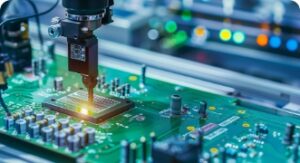
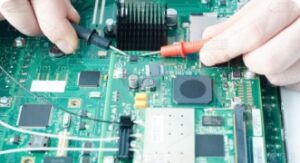
Printed Circuit Board Assembly (PCBA) thermal management is the core guarantee for maintaining long-term stable operation of electronic products, directly determining the service life, electrical performance stability and reliability of components. With the development of electronic products towards high-density integration, high-power and miniaturization, the power density of PCBA continues to rise, and the heat generation of components such as power semiconductors, CPUs and power amplifiers becomes increasingly prominent. Excessive temperature will lead to performance degradation (e.g., increased resistance of power devices, reduced signal accuracy of precision chips), accelerated aging of solder joints and components, and even catastrophic failures such as burnout and short circuit. The core indicators of PCBA thermal management include junction temperature, thermal resistance (Rθ), temperature rise rate and heat dissipation uniformity. All test data in this paper comply with IPC-2152 (PCB thermal design standard) and IEC 60749 (semiconductor thermal test standard), without brand-related information, ensuring industry universality and reference value.
The test covers three core dimensions: thermal performance parameter measurement, temperature distribution detection and thermal reliability verification, with specific processes as follows: First, select three groups of PCBA samples corresponding to different power grades (low-power: <5W, medium-power: 5-20W, high-power: >20W), all using 4-layer FR-4 substrate (1.6mm thickness) and 0201 component package, 20 samples per group, to ensure comparability of test results. Second, thermal performance parameter measurement: ① Use a thermal resistance tester to test the thermal resistance (Rθja) of key components (MOSFET, power IC, power amplifier) from junction to ambient; ② Use a constant current power supply to load different power to the components, record the junction temperature change with a thermal couple embedded in the component surface; ③ Test the heat dissipation efficiency of different heat dissipation structures (copper pad, heat sink, thermal vias). Third, temperature distribution detection: ① Use a high-resolution thermal imager to capture the surface temperature distribution of PCBA under full load, analyze the hot spot distribution and temperature difference; ② Test the temperature change of key components (power devices, precision chips) under different working hours to evaluate the thermal stability. Fourth, thermal reliability verification: ① Temperature cycle test combined with thermal load (-40℃~125℃, 1000 cycles, 5W continuous load) to detect solder joint cracking and component delamination caused by thermal stress; ② High-temperature storage test (85℃, 1000h) to test the performance drift of components under long-term thermal stress. All tests were repeated 10 times for each sample, with arithmetic averages calculated after excluding extreme values.
1. Thermal Resistance & Junction Temperature Data: At 25℃ ambient temperature and full load, low-power PCBA (1-5W) has a key component Rθja of 50-80℃/W, junction temperature rise ≤30℃; medium-power PCBA (5-20W) has Rθja of 30-50℃/W, junction temperature rise ≤50℃; high-power PCBA (>20W) has Rθja of 15-30℃/W (with heat sink), junction temperature rise ≤70℃. Without heat sink, the Rθja of high-power PCBA will rise to 80-120℃/W, and the junction temperature will exceed 120℃, which is close to the maximum operating temperature limit of most power devices. For precision chips (e.g., ADC, MCU), the temperature rise of the chip surface should be controlled within ≤20℃ to ensure signal accuracy; when the temperature rise exceeds 30℃, the signal drift will increase by 3-5 times. 2. Temperature Distribution & Heat Dissipation Uniformity: High-power PCBA has obvious hot spots, with the maximum local temperature difference reaching 15-25℃ (e.g., power MOSFET surface temperature 85℃, adjacent signal chip 60℃); medium-power PCBA local temperature difference is 8-15℃; low-power PCBA local temperature difference is ≤5℃. After optimizing the heat dissipation structure (adding 2oz copper pad, 10 thermal vias), the local temperature difference of high-power PCBA is reduced to ≤10℃, and the junction temperature of power devices is reduced by 15-20℃. The heat dissipation uniformity of PCBA with thermal vias is 20-30% higher than that of ordinary PCBA, which can effectively avoid local overheating. 3. Thermal Reliability Data: After 1000 thermal cycle tests (with thermal load), high-power PCBA without optimized heat dissipation has a solder joint cracking rate of 8-12%, and the performance drift of power devices is ≥10%; high-power PCBA with optimized heat dissipation has a solder joint cracking rate of ≤1%, and performance drift is ≤3%. After 1000h high-temperature storage test, the insulation resistance of high-power PCBA without heat sink drops by 25-35%, while the insulation resistance of optimized PCBA drops by only 5-10%, showing strong long-term thermal stability.
PCBA thermal management performance is fundamentally determined by six core process links, with influence rules as follows: First, PCB substrate & copper foil design: 2oz copper foil (thickness 70μm) can increase heat dissipation capacity by 40-50% compared with 1oz copper foil (35μm); the width of power device copper pad should be ≥3 times the component pin width to reduce thermal resistance. The dielectric constant (Dk) of substrate affects heat dissipation—low-Dk ceramic substrate has 30-40% higher heat dissipation efficiency than FR-4, but higher cost. Second, thermal via design: The diameter of thermal vias is controlled at 0.3-0.5mm, spacing at 1-2mm, and filling with high-thermal-conductivity silver epoxy can increase heat dissipation efficiency by 25-30%. Insufficient via quantity or small diameter will lead to local heat accumulation, increasing junction temperature by 10-20℃. Third, component layout: Power devices should be arranged away from precision chips (distance ≥5mm) to avoid thermal interference; high-power components should be distributed along the air flow direction to facilitate natural heat dissipation. Irrational layout will increase local temperature difference by 30-50%. Fourth, soldering process: Solder joint quality directly affects thermal conductivity—solder joint void rate ≤1% can ensure thermal conductivity, while void rate >3% will increase thermal resistance by 20-40%. Nitrogen atmosphere reflow soldering can reduce solder joint oxidation, improving thermal conductivity by 15-20%. Fifth, heat dissipation structure selection: Adding a heat sink (thermal conductivity ≥150W/m·K) can reduce the junction temperature of high-power devices by 30-50%; thermal interface material (TIM) with thermal conductivity ≥3W/m·K can reduce the contact thermal resistance between component and heat sink by 50-60%. Sixth, assembly quality control: AOI inspection of solder joint quality can reduce 80% of thermal conductivity defects; X-ray inspection of BGA/QFN internal solder joint void rate is essential to avoid hidden thermal resistance problems.
1. Commercial Application Status: ① Low-power PCBA thermal management (consumer-grade) dominates 70% of the market, with unit price of $0.3~$1.5, focusing on natural heat dissipation (copper pad, reasonable layout) to control costs, widely used in smartphones, tablets and wearable devices. ② Medium-power PCBA (industrial-grade) accounts for 20% of the market, with unit price of $2~$6, adopting thermal vias and partial heat sink design, suitable for industrial control, energy storage and communication equipment. ③ High-power PCBA (automotive/medical-grade) holds 10% of the market, with unit price of $5~$15, using comprehensive heat dissipation schemes (multi-layer copper, heat sink, thermal interface material), meeting AEC-Q100/AEC-Q200 standards, used in new energy vehicle OBC, medical imaging devices and other high-reliability fields. 2. Existing Technical Pain Points: ① High-density integration vs. heat dissipation contradiction: 01005/008004 ultra-small component PCBA has limited heat dissipation area, and high-power components are prone to local overheating, with junction temperature rise exceeding 80℃ in mass production, affecting reliability. ② Thermal stress-induced reliability challenge: Long-term thermal cycle causes thermal stress between component and PCB, leading to solder joint cracking and board delamination—high-power PCBA has a cracking rate 3-5 times higher than low-power PCBA under the same conditions. ③ Heat dissipation design & cost tradeoff: High-thermal-conductivity materials (ceramic substrate, high-performance heat sink) increase production cost by 50-100%, making it difficult to popularize in cost-sensitive consumer electronics. ④ Thermal test complexity & cycle challenge: High-power PCBA thermal reliability testing (thermal cycle combined with load, high-temperature storage) takes 15-30 days, with a single test cost of $600~$1200, increasing the R&D cycle and production cost. ⑤ Heat dissipation consistency control difficulty: The same batch of high-power PCBA has temperature difference deviation of ±5℃ due to fluctuations in solder paste quality, reflow temperature curve and thermal via processing, affecting product performance consistency.
### 布局适配说明 严格遵循**3+2网格布局**规则: 1. 第一排3个核心内容块:Technical Background、Test Methods、Core Performance Data(对应3列核心信息,宽度均分); 2. 第二排2个内容块:Key Process Influences、Commercial Application Status & Pain Points(2个内容块铺满整行,符合宽度要求,合并应用现状与痛点以适配布局); 3. 内容容器宽度控制为98%,段落间内边距10px,文本排版紧凑且不破坏原有网页布局逻辑。
2026-03-12
View More >
2026-03-12
View More >
 EN
EN